Mon - Fri:
730am - 430pm
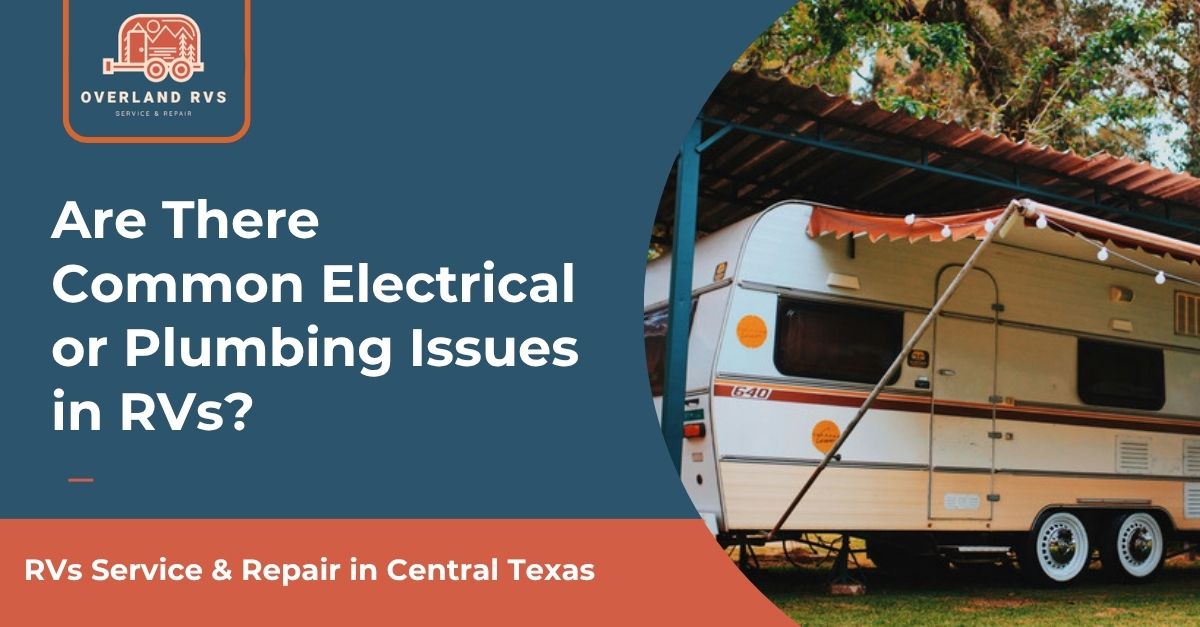
Your RV is basically a mini house on wheels and like any home, your RV can face issues too, including blown fuses, tripped breakers, weak batteries, blocked drains, pump troubles, and leaking fittings. Some simply might be solved with periodic maintenance while others may need repairs.
So, being one of the best RV repair Georgetown TX companies, we will discuss what the common electrical and plumbing issues RVs face, how to recognize them, and when to get professional help.
Loss of power, charging faults, leaks, low water pressure, and clogs are all problems you may encounter, but several items stopping together can also point to one shared supply problem. Knowing which system runs each item helps you describe what has stopped working.
System | What it supplies or handles | Problems you may notice |
12-volt DC | Interior lights, water pump, many appliance controls | Dim lights, weak pump, controls losing power |
120-volt AC | Wall outlets, microwave, most roof air conditioners | Dead outlets, appliances stopping, tripped breakers |
Fresh water | Water from your tank or campground hookup | Drips, poor pressure, pump running unexpectedly |
Wastewater | Sink, shower, and toilet drainage | Slow drains, backups, leaking dump valves |
Gulf Stream's owner manual explains that many appliances need 12-volt power for their controls even when they use another energy source. For instance, a weak house battery can affect your water pump and appliance controls at the same time.
Overland RVs offers RV service Georgetown TX owners can book for both electrical and water-system concerns.
Power loss can come from an overloaded circuit, a protective device that has tripped, or a problem with the battery and charging equipment.
Your hookup can overload if you run multiple appliances together, even if each appliance itself is working fine, the combined electricity demand matters a lot.
For instance, if your supply is 30-amps and the air conditioner is running at 15 amps and the oven is running at 12 amps, you’re already getting 27 amps out of 30. If you put 4 more amps of load, the breaker will trip. Make sure to learn how many amps each appliance consumes by reading their labels.
Next, the GFCI or ground fault circuit interrupter, which protects against shock-causing electrical faults. One tripped GFCI can turn off several outlets in the kitchen or bathroom so that may result in your outlets not working.
You can check the accessible breaker and GFCI controls using your owner's manual. If a device repeatedly trips, leave that circuit off for inspection rather than continuing to reset it.
The battery’s supply can be interrupted due to loose or corroded connections or it can lose power if stored for long, which is why Keystone emphasizes regularly checking connections and charging the battery frequently.
Now if your battery keeps draining while plugged in means the converter that usually supplies the DC power and charges the battery is not working normally. An RV technician can inspect and fix the problem.
Moreover, if you smell something burning, notice melted plugs, or experience shock from RV’s body, this needs immediate attention. Keep people away. If safe, disconnect the electrical supply and call 911 if there’s fire or smoke.
Leaks, restrictions, incorrect valve settings, and worn components can interrupt your water supply. Drainage problems need a different check because the wastewater must reach and leave the holding tanks.
Cracked fittings, loose connections or damaged seals can cause leaks, resulting in water collection under the sink or around the toilet, soaking the flooring and cabinet base before you see a puddle.
Road vibrations can cause the fittings to loosen over time and overtightening the pipes also puts more pressure on the seals, crushing the internal rubber and loosening them over time.
If you notice an active leak, turn off the campground water supply and the pump and stay away from the wet electrical equipment until its power is safely isolated.
Multiple elements can cause poor flow such as a clogged filter, blocked pump strainer, debris catching screen, weak campground supply, or kinked hose. You can find the root cause by noting whether low pressure occurs on the onboard pump or city water.
If the pump starts with all faucets closed, it might be losing pressure due to a leak or its own valves, even if the water doesn’t escape outside. If the pump runs without providing water, check tank levels and winterize valve position before going for a pump replacement.
Also, your city-water connection needs a regulator to limit incoming pressure. Camco's 40055 regulator is preset to 40-50 PSI, but your RV manual determines its permitted pressure. Removing it to improve flow can expose the plumbing to excessive pressure.
No hot water can mean that your heater has lost power or has an ignition or element fault. A bypass valve left in its winterizing position can also keep heated water from reaching your faucets. You can check the operating mode, displayed error code, and valve positions against the appliance instructions.
A tank-type heater needs to be full before you turn on the heat, as Suburban warns that operating the electric element without water damages it. Gas components and internal electrical parts need qualified servicing.
A lot of times when we wash the dishes, food scraps and grease goes into the drain. Similarly, hair and unsuitable toilet waste keeps building up in the lines, slowing the drainage significantly.
Furthermore, a holding tank that needs emptying can result in backups when you flush or try to drain the kitchen sink. As per Keystone, keeping your black-tank valve shut during dumps and adding water before flushing keeps the solids from sticking to the tank’s bottom, making it easier to empty later.
A leaking dump valve or sewage backup needs attention before you continue using the affected fixtures.
When the problem is limited to plumbing and electric repair, the cost will almost always be less. However, some issues like a damaged motor, several worn components and cracked housing make replacement more practical in the long run.
Remember, the price of the part you’re replacing won’t be the only cost. Diagnosis, labor, shipping, and tax may add to the replacement figures. The final bill for RV repair Georgetown TX owners request also depends on access and related damage. A pump behind cabinetry can take longer to reach, and wet flooring may need separate repair.
You should ask for a parts-and-labor breakdown and compare repair with replacement before approving work. If repairing an older pump costs nearly as much as installing a new one, its remaining condition and the replacement warranty become worth considering.
Overland RV offers fast and long-lasting RV repair in Georgetown TX. Whether you need help with 12 or 120-volt electrical systems, water heaters, plumbing, and sewer systems, we can help. Call 512-886-9040 to get help fast.
When a generator or shore power are not available, your battery would require an inverter to supply 120-volt outlets. An inverter converts battery power into AC electricity. Depending on your setup, it may serve only selected outlets, so check which circuits your installed inverter supplies.
A dirty, worn, or poorly seated flush-ball seal can allow water to escape into the holding tank. As per Dometic 3120/320 manual, you can clean the ball and seal before replacing the seal that’s leaking. Make sure to only use the cleaning products and methods approved for your toilet model.
A dirty holding tank can cause a false reading even after it empties, as Keystone's monitor-panel guide explains. Once you've confirmed the tank drained, follow its recommended cleaning procedure and arrange an inspection if the reading remains inaccurate.